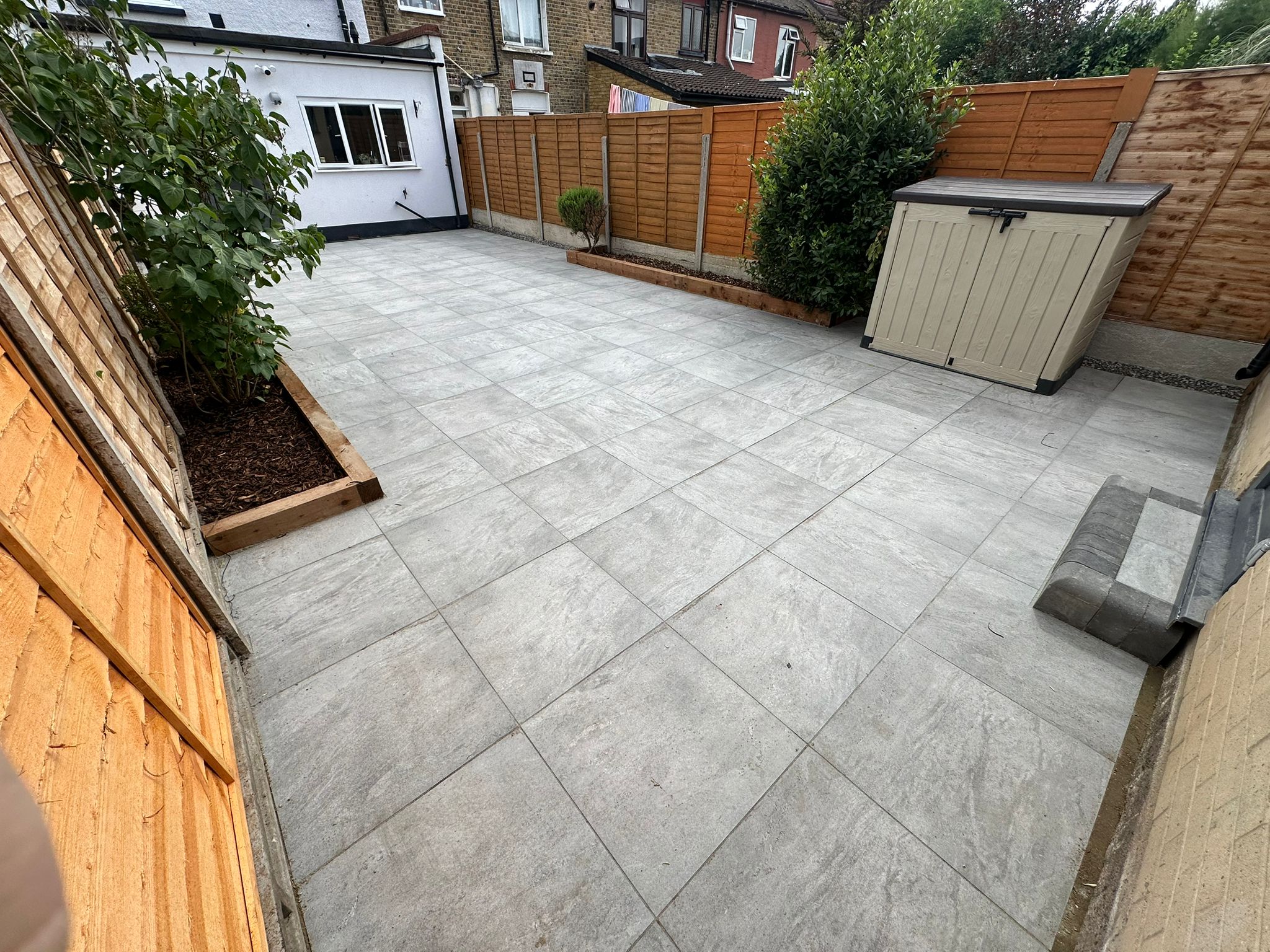
Porcelain paving installation in Harold Wood gave this garden a more practical and more polished finish after the old surface started to look dated and harder to live with. The aim was to replace worn concrete with a patio that felt smarter, looked brighter, and made the space easier to use day to day.
What This Harold Wood Project Involved
- Old hardstanding replaced with new porcelain paving
- Cleaner and more modern finish for the garden
- Surface prepared before the new paving was laid
- Better use of the space outside the rear of the property
- Based on a real residential project in Harold Wood
Why the Old Surface Needed Replacing
The existing area had reached the stage where it was no longer giving the garden the right finish. It looked tired, felt dated against the property, and did little to make the outdoor space feel inviting.
In a garden like this, the paving choice has a big effect on the overall feel of the space. A modern porcelain surface can give a much sharper and more consistent finish than old concrete, especially when the goal is a cleaner and more contemporary look. If you are comparing surface options, our garden patio installations page gives a better idea of the types of patio work we carry out.
Why Porcelain Suited This Garden
Porcelain was a strong fit here because it gave the homeowners the cleaner lines and neater appearance they were after. It works well when the aim is a modern patio that feels bright, low-fuss, and better matched to an updated garden layout.
If you are currently comparing patio surface types, this independent guidance on porcelain paving is a great starting point. It helps you understand the technical benefits of the material and why it’s the perfect choice for achieving a bright, modern, and low-fuss garden layout.
Planning the New Paved Area
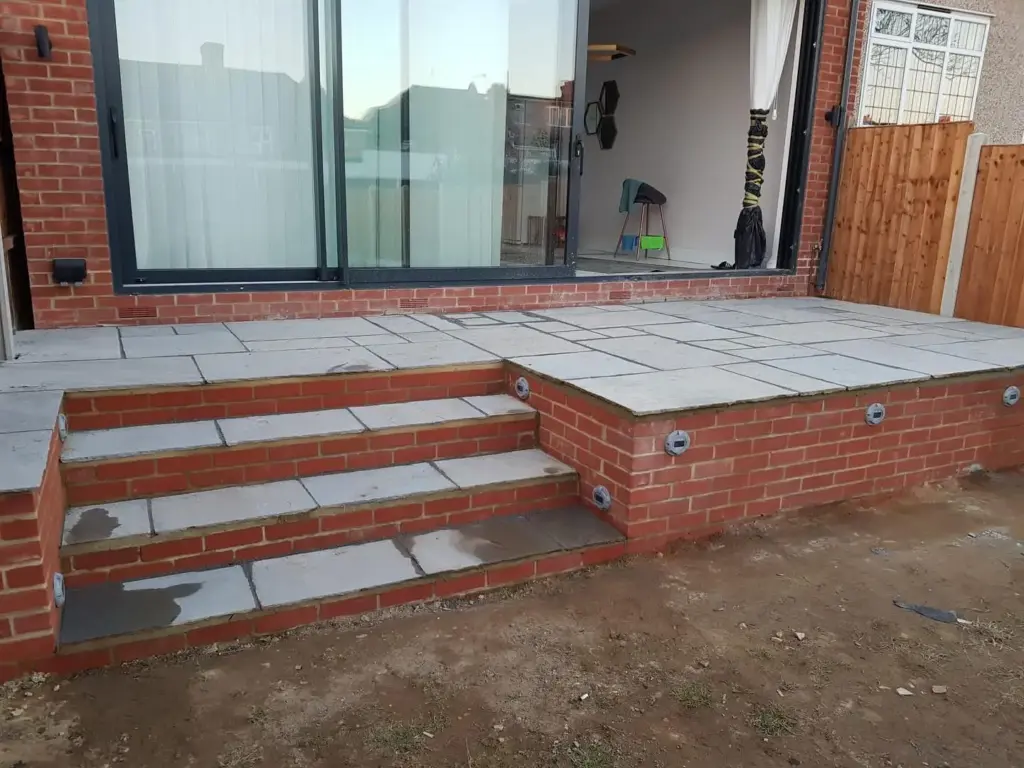
This project needed more than a simple surface swap. The space had to be prepared properly so the new patio would sit right, feel stable underfoot, and look in keeping with the house once complete.
That planning stage matters on porcelain work. The finish only looks right when the levels, layout, and surrounding edges have been thought through carefully from the start. That is especially important on a garden patio where the new paving sits close to doors, walls, and changes in level.
How the New Porcelain Surface Was Put In
The old surface was removed and the area was prepared for a full new paving installation. From there, the garden was rebuilt around the new porcelain finish so the completed space felt more deliberate and far more visually consistent.
Once the preparation was complete, the porcelain paving was laid to give the property a neater and more refined outdoor area. You can compare this with other completed work in our projects gallery, or explore more about our garden patio installations if you are planning something similar.
Practical Build Considerations
A patio like this depends on more than the slab itself. Surface choice matters, but so do the build-up underneath, the final levels, and the way the paving meets the rest of the garden. Those details are what help the finished area feel right once it is in everyday use.
For a useful overview of why build quality matters on paved surfaces, the Interlay technical guidance technical guidance on paving installation and construction is a good reference point.
View the Full Project Gallery on Facebook
The Finished Result
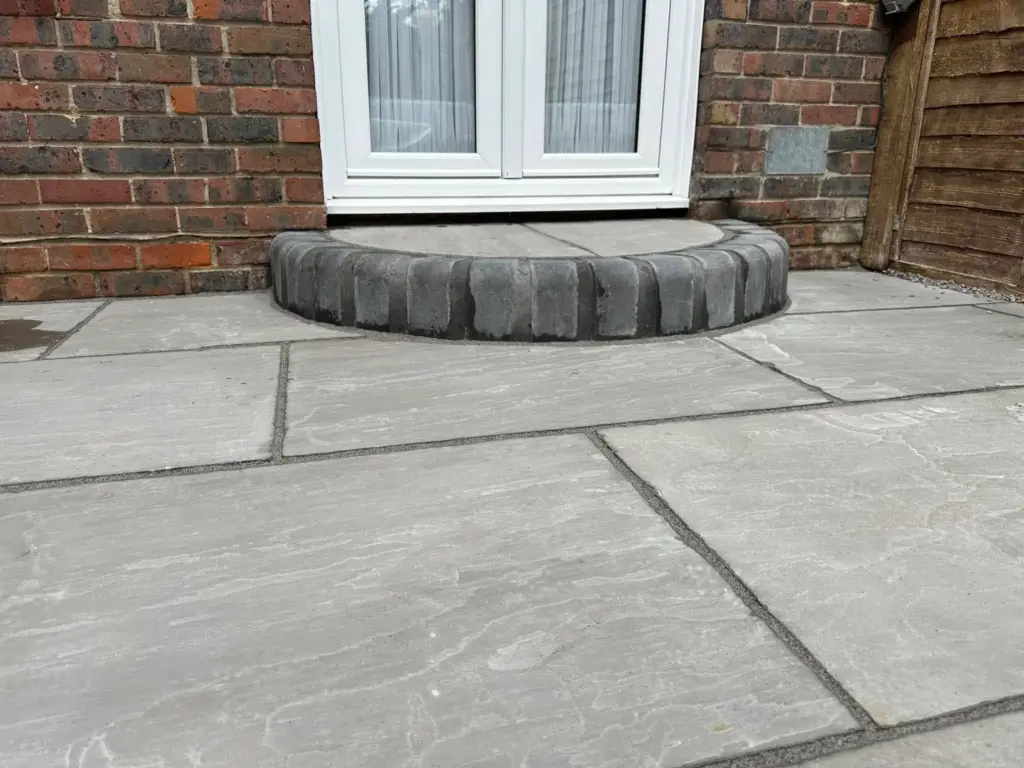
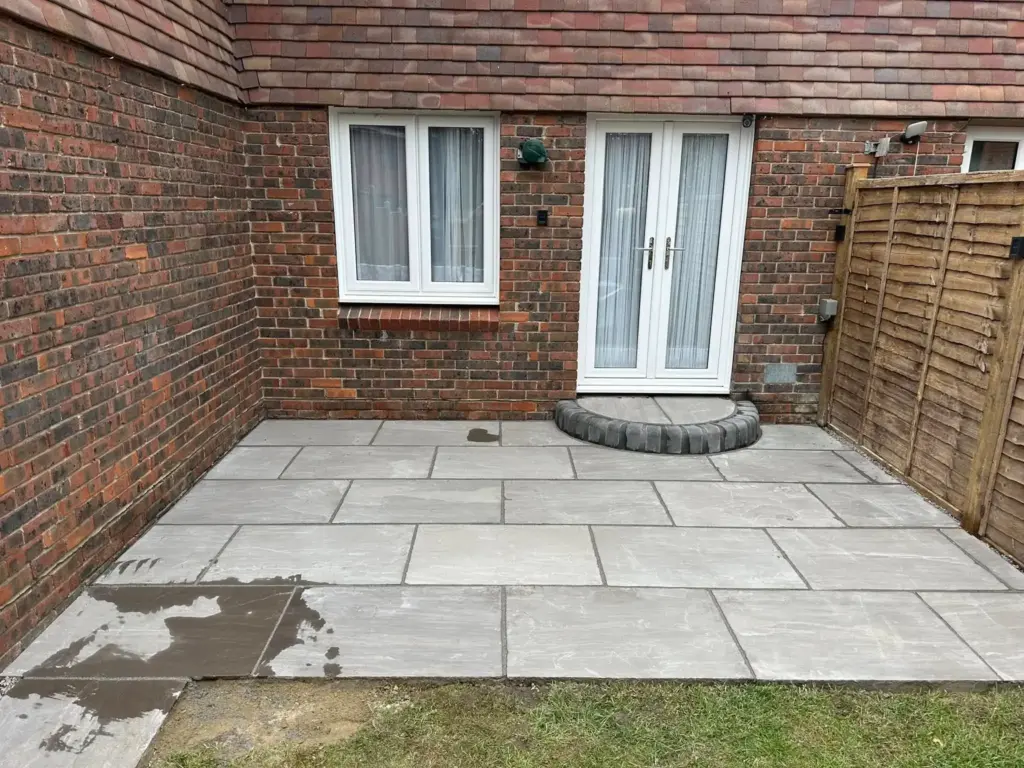
The new porcelain paving gave the garden a much cleaner and more modern appearance. Instead of an old concrete surface that dragged the space down, the property now has a patio area that looks brighter, feels more usable, and sits more comfortably with the style of the home.
That change is not only visual. A better laid and better planned patio also makes it easier to use the garden properly for sitting out, moving around, and enjoying the space through more of the year.
Proof from the Harold Wood Project
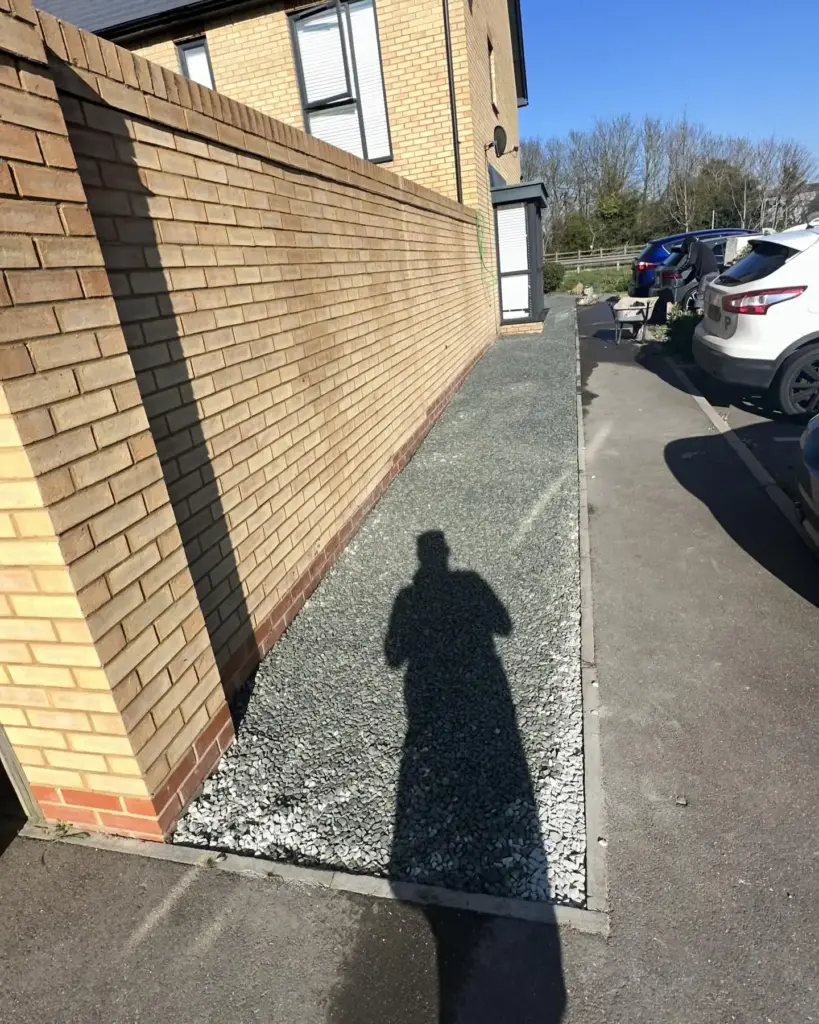
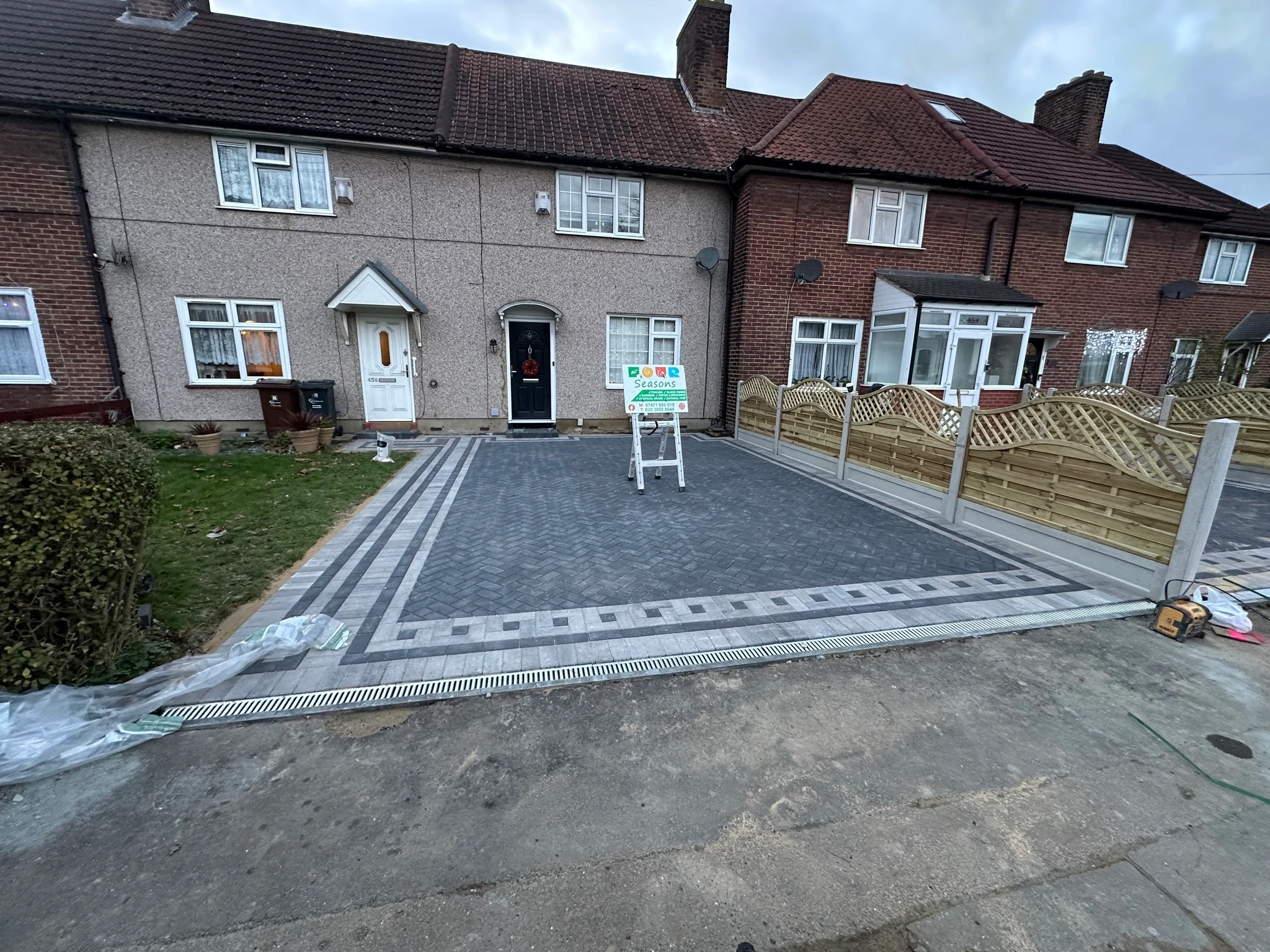
This page is based on a real Harold Wood paving project and uses live project imagery from the completed work. That matters because it shows the actual setting, the layout of the paved area, and the finished look of the porcelain surface once installed.